Guides
How to Choose a Solar Installer: Questions Worth Asking
The questions that separate a solid solar installer from a costly mistake, from the team at SD Solar. Warranties, panel origins, and the numbers that matter.
By SD Solar5 min readUpdated 4 September 2026
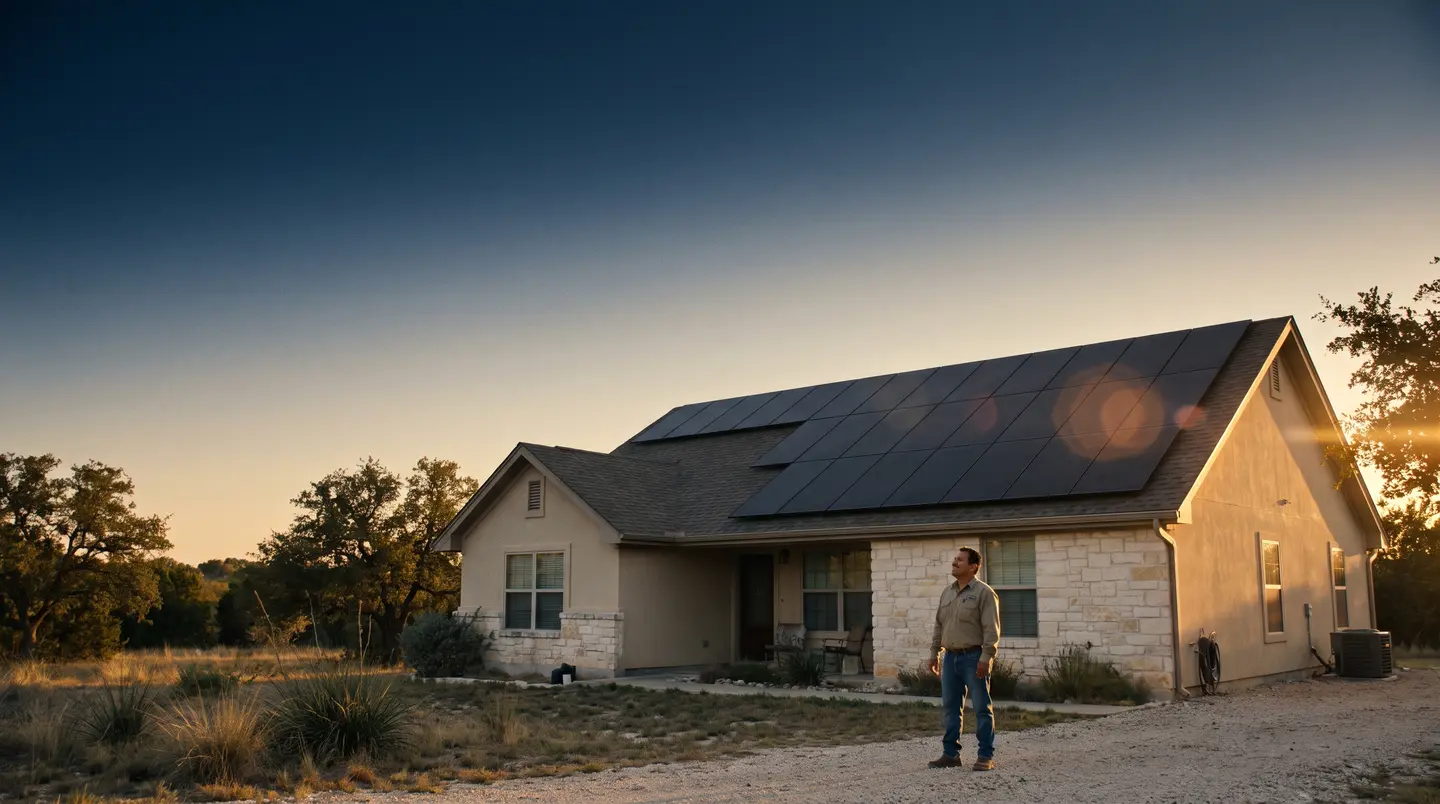
Choosing a solar partner comes down to five questions: How long have you installed in my area? What warranty covers workmanship separately from panels? Who handles the grid paperwork? What's your rated production estimate versus real output? And who answers the phone in year eight? Get those answered in writing before you sign.
What credentials should a solar installer actually have?
Licensing varies by region, but the baseline is a general contractor's license, an electrical license held in-house (not subcontracted to a rotating cast), and manufacturer certifications for the specific panels and inverters they install. Ask for numbers. Cross-check them with your state licensing board.
At SD Solar, founded in 2016 and operating out of our shop on Miramar Road, we've watched three local installers fold in the past four years. Every one of them had glossy brochures. None had electricians on payroll. When the company vanishes, so does the workmanship warranty, and homeowners are left calling the panel manufacturer, who will politely explain that panel warranties don't cover roof leaks caused by bad flashing.
The U.S. Department of Energy recommends verifying that your installer holds NABCEP certification, which remains the industry's most recognized credential for photovoltaic professionals [1]. If they can't name their certified installer on staff, keep looking.
How do I compare solar quotes fairly?
Quotes look wildly different because installers bundle costs differently. One will show you a low panel price and hide the inverter markup. Another quotes a "turnkey" figure that leaves out the main service panel upgrade you'll need. Line-item everything.
| What to compare | Good quote shows | Red flag |
|---|---|---|
| Panel + inverter model | Exact make, model, wattage | "Tier 1 panels" with no model |
| Workmanship warranty | 10-25 years, separate from panel warranty | Bundled or unstated |
| Production estimate | kWh/year with shading analysis | Only system size in kW |
| Total price | Itemized: hardware, labor, permits, interconnection | One lump sum |
A 6.4 kW system we installed last March on a home near Balboa Park quoted at $18,200 before the federal tax credit. The homeowner had two competing bids: one at $15,900 that excluded the main panel upgrade ($2,800 extra later), and one at $22,000 that used the same panels with a longer labor warranty. Middle bid won. That's usually how it goes.
What questions separate a real installer from a salesperson?
Most homeowners ask about price first. That's the wrong first question. Ask about failure rate and service response time, because a system that produces for 25 years but sits dead for six weeks in year nine has cost you real money.
Here's what we'd ask any installer, including us:
- How many systems have you installed within 20 miles of my address, and can I visit one that's at least five years old?
- Who physically performs the install, your W-2 employees or a subcontracted crew you met last week?
- What's your average response time when a monitoring alert fires?
- Do you handle the utility interconnection agreement and permitting in-house, or is that on me?
- What happens to my warranty if you sell the business or close?
- Can you show me a real production report from a system similar to mine, not a marketing projection?
- What's the specific degradation rate of the panels you're proposing, and how does that compare to the industry average of roughly 0.5% per year [2]?
If the answers get vague, you have your answer. For more on how we approach installs, see behind the work at SD Solar.
Why does local experience matter more than national brand recognition?
Solar isn't just panels on a roof. It's permitting through your specific jurisdiction, interconnection with your specific utility, and knowing which inspector wants conduit run which way. A national installer routes your job through a call center. A local team drives past your house on the way to lunch.
Try this: call the office number at 4:45 p.m. on a Friday. See who picks up. We've picked up plenty of Friday afternoon calls from homeowners whose out-of-town installer stopped returning messages. If you're new to the area or new to solar entirely, our welcome post walks through what we do and why we started.
FAQ
How long should a solar installation take from contract to activation?
From signed contract to permission-to-operate, expect 6-12 weeks in most of San Diego County. Design and permitting take 2-4 weeks, physical installation is typically one to two days, and utility interconnection adds another 3-6 weeks depending on backlog. Anyone promising two weeks total isn't accounting for the utility.
Should I choose the cheapest solar quote?
No. The cheapest quote almost always omits something: the main panel upgrade, extended workmanship warranty, or a shading analysis that would have flagged a lower production estimate. Compare line items, not totals. A quote $2,000 higher with a 25-year labor warranty often saves you five figures over the system's life.
What warranty length is standard for solar panels?
Quality panels carry a 25-year production warranty guaranteeing at least 80-85% of rated output. Workmanship warranties from the installer are separate and typically run 10-25 years. The installer warranty is the one that matters most, because it covers roof penetrations, wiring, and mounting, which is where problems actually appear.
Can I switch installers if I'm unhappy after signing?
Usually yes, if you catch it during the cancellation window, which is three days in California under state law. After that, you're bound by contract terms. Read the cancellation clause before signing, not after. We've onboarded customers mid-project from other installers, but it's messier and costlier than starting clean.